
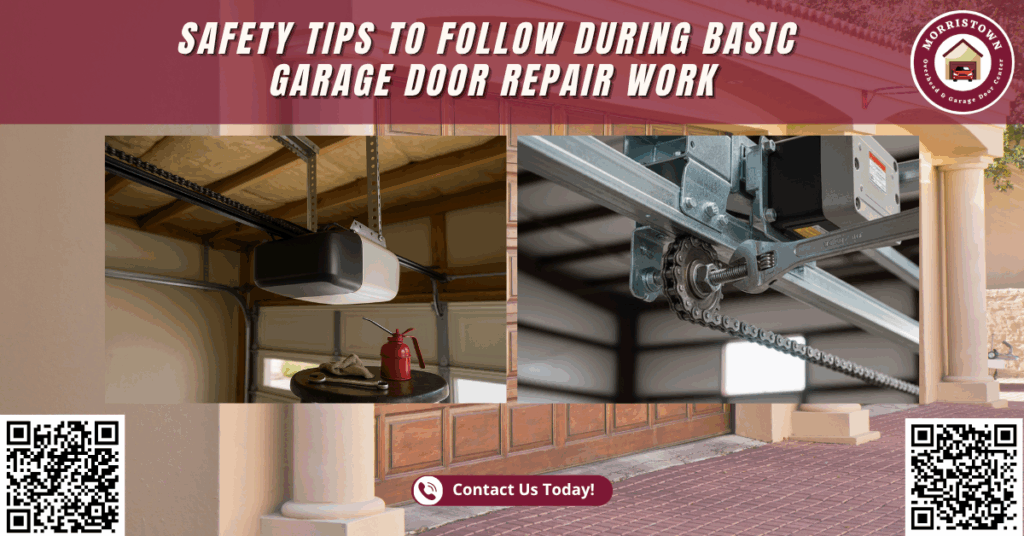
Every week, we receive calls that begin the same way. Someone started a quick fix on their door, and something small turned into something stressful. Garage door repair looks simple from a distance, yet the system depends on tension, weight, and timing that can surprise even handy homeowners. A typical residential door can weigh as much as a refrigerator, and the energy stored in a spring or cable can be released in a fraction of a second.
Here is a real situation. A customer in Audubon tried to quiet a noisy door by tightening a few loose hinge bolts. The door was in the raised position when one roller slipped out of the track. The panel twisted, and the door dropped several inches before the emergency cord released the opener. No one was hurt, but the panel bent, a cable frayed, and the car’s roof now has a dent. We arrived, rebalanced the springs, replaced the cable, installed new rollers, and aligned the tracks. The lesson was clear. Preparation and safe methods matter more than speed.
Another point to consider is how often your door operates. A family with two vehicles may use the door a dozen times per day. That adds up to thousands of cycles per year. Parts like springs, rollers, and bearings are wearing items. With the right checklist and mindset, you can complete basic maintenance safely, recognize warning signs, and know when to stop and call in trained technicians before a small concern becomes an expensive problem.
What Makes Garage Doors Risky and How to Respect the System
A garage door system is a simple idea with serious forces at play. The door moves on tracks with rollers. Springs counterbalance the door’s weight so a person or garage door opener can move it with limited effort. Cables connect the spring system to the door. Hinges, bearing plates, and brackets hold everything in position. Modern openers add sensors and logic controls for safety.
Key safety realities:
- The door is heavy and can crush fingers, toes, or objects if it falls.
- Springs and cables are under high tension. Sudden release can cause severe injury.
- Electricity powers the opener and accessories. Any work around wiring requires the power to be disconnected.
Respecting these forces does not mean you cannot perform basic tasks. It means you plan, prepare, and practice safe habits every time.
Step Zero: Plan Your Work Like a Pro
Before you touch a bolt, plan the job.
- Set your goal – Know the exact task. For example, lubricating rollers, tightening hinge screws, cleaning sensor lenses, or aligning photo eyes.
- Choose the right time – Work during daylight with a clear head. Avoid rush hours in your household when cars need to come and go.
- Clear the area – Move vehicles out. Remove bikes, bins, and tools from under the door. Keep children and pets out of the garage until you finish.
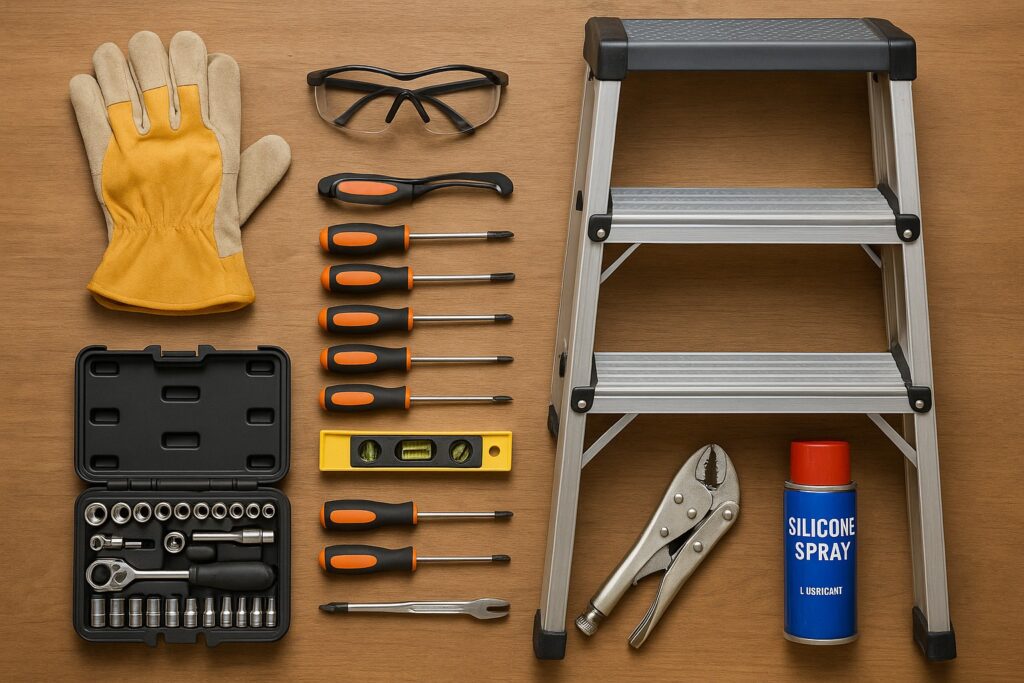
- Gather proper tools – Gloves, eye protection, a sturdy step ladder, a socket set, a screwdriver set, a small level, locking pliers, and a good silicone or lithium spray for lubrication. If a task calls for winding bars or spring work, stop and call a professional. Do not substitute screwdrivers for winding bars.
Lock It Out: Disconnect Power and Secure the Door
Always start safely.
- Unplug the opener from the outlet. If yours has a battery backup, switch it off or remove the backup battery during the service. This prevents accidental activation from remotes, vehicle buttons, or smart-home commands.
- Disengage the opener with the emergency release only when the door is in the down position. A raised, unbalanced door can fall.
- Secure the door by placing locking pliers or C clamps on the tracks just above the bottom rollers so the door cannot move unexpectedly during your task.
Personal Protective Equipment: Small Habits, Big Protection
- Gloves to protect hands from sharp cable ends and sheet-metal edges.
- Safety glasses to shield eyes from dust, rust flakes, or snapping fasteners.
- Closed-toe shoes with a good grip. Avoid flip-flops and sandals.
Stable ladder rated for your weight with slip-resistant feet. Place it on flat concrete and never stand on the top step.
A Quick System Health Check You Can Do Safely
Perform this simple inspection every three months. It takes ten minutes.
- Door balance test – With power disconnected, lift the door by hand to waist height and release. A balanced door will hover or move only slightly. If it slams down or shoots up, the springs are out of balance. Do not adjust springs on your own. Contact a technician.
- Roller condition – Look for cracked nylon, chipped edges, or dirty bearings. Spin them with your finger. Rough spinning is a sign to replace.
- Hinges and hardware – Check for loose hinge screws and wobble at the brackets. Tighten to snug, not overtight. Over-tightening can strip wood or deform metal.
- Tracks – Sight down each track to look for bends or S curves. A gentle misalignment can be corrected by a pro. Do not hammer tracks. That causes more damage.
- Cables – Check ends near the bottom brackets for frays, rust, or broken strands. If you see damage, stop using the door and call for service immediately.
- Opener safety sensors – Wipe lenses with a soft cloth. The lights on each sensor should be solid, not blinking. A blinking light means misalignment or obstruction.
Where DIY Ends: Springs and Cables Are Professional Territory
Springs and cables are not casual projects. Torsion springs above the door and extension springs along the tracks store energy like coiled steel muscles. When those muscles release without control, they can whip, strike, or cause the door to drop. If you notice any of the following, pause and schedule a service appointment:
- Door feels much heavier than usual
- Door opens a few inches, then stops
- One side of the door rises higher than the other
- You hear a loud bang, and the door suddenly stops working
- You see a gap in the torsion spring winding
Our technicians carry the correct winding bars, cones, and fixtures. We remeasure lift, verify spring wire size and length, and set the proper number of turns for balanced operation. That is a safe job for a trained team with the right experience.
Lubrication That Actually Helps
Lubrication makes your door quieter and reduces wear. It is also an easy DIY win if you use proper technique.
- Use silicone spray or lithium spray designed for door hardware.
- Avoid heavy grease on tracks. Grease attracts dust that turns into paste and creates drag.
- Apply lightly to rollers, hinges, torsion spring coils, and the opener chain or belt. Wipe away drips.
- Frequency every three months or at the start of each season in New Jersey, where humidity and temperature swings affect metal and plastics.
Tip for clarity. The tracks themselves should be clean and dry. If you see sticky buildup, wipe the track with a slightly damp rag and then dry it.
Fastener Tightening Without Damage
Many homeowners over-tighten hinge screws and bracket bolts because loose hardware looks obvious and a strong turn feels satisfying. Here is the safer approach.
- Use a hand tool rather than an impact driver.
- Turn until the fastener is snug and the hardware no longer shifts.
- If a wood screw spins without tightening, remove it, fill the hole with wood glue and a hardwood dowel or a toothpick bundle, then reinstall a slightly longer screw.
- If a metal bracket is bent, do not force it flat with the door assembled. Replacement is safer.
Photo Eye Sensor Alignment That Works Every Time
Misaligned sensors make doors reverse when nothing is in the way. This is a common and safe homeowner fix.
- Clean the lenses with a soft cloth.
- Check that each sensor sits at the same height, about six inches above the floor.
- Loosen the wingnut or mounting screw slightly, then aim the sensor so its indicator light turns solid.
- Tighten the hardware gently while keeping the light steady.
- Test with a small object under the door path. The door must reverse.
If the light does not go solid, check wiring for staples that may have pierced the insulation or for pet damage near the floor.
Safe Testing After Any Task
When you finish a maintenance step:
- Remove the C clamps or locking pliers from the tracks.
- Reconnect the opener to power.
- Use the wall button to open and close the door while standing to the side.
- Listen for grinding, squeaks, or rattles. Watch each roller as it passes the hinge points.
- Perform a force reversal test by lightly resisting the door on the way down. The opener should reverse with gentle pressure. If it needs a heavy push, reduce the closing force per the opener manual or call for adjustment.
Keeping Children, Guests, and Pets Safe
Talk about garage safety as a family rule.
- Treat the wall button like a tool, not a toy.
- Keep remotes out of reach of small children.
- Teach children to stand well clear of a moving door and never run under a closing door.
- Never place fingers between door sections. Modern sections may have pinch-resistant edges, but many doors do not.
Weather, Corrosion, and Seasonal Tips for New Jersey Homes
Our area sees humid summers, road salt in winter, and occasional coastal moisture that reaches inland. These conditions affect doors and hardware.
- Winter – Road salt and slush splash onto the bottom panel and hardware. Rinse the lower two feet of the door and the bottom brackets when temperatures allow to reduce corrosion. Lubricate lightly after washing.
- Spring – Temperature swings loosen fasteners. Do a fastener check and a balance test.
- Summer – Heat expands metal and softens old nylon rollers. If your door grows noisy in summer, it may need roller replacement or lubrication.
- Fall – Clean spider webs and dust from sensors and lights. Replace opener bulbs with LED bulbs that are opener safe.
The same care helps coastal homeowners in places like Ocean Isle Beach, Garden City Beach, North Myrtle Beach, and Surfside Beach, where salt air accelerates corrosion. If you own a vacation property or maintain a commercial site in a coastal zone, schedule regular maintenance twice yearly to stay ahead of rust and wear.
Noise Troubleshooting Without Guesswork
A noisy door can point to multiple issues. Use sound and location to guide you.
- Squeak at hinges – Lubricate hinge barrels and the pivot points. Replace cracked hinges.
- Rumble along the track – Flattened or cracked rollers. Replace rollers with quality nylon rollers with ball bearings.
- Clank near the opener – Loose mounting hardware, a loose chain, or a worn sprocket. Tighten the opener mounting angle iron, adjust the chain slack per the manual, or schedule service if the sprocket wobbles.
- Boom or bang once – Often a broken spring. Stop and call a pro.
Understanding Your Opener Type
Different openers move the door in different ways. Knowing yours helps you maintain it.
- Chain drive – Durable, a bit louder. Keep the chain properly tensioned and lightly lubricated.
- Belt drive – Quiet operation, ideal near living spaces. Inspect the belt for cracks or fraying.
- Screw drive or direct drive – Requires specific lubricants. Follow the brand guide for best results.
Smart openers connect to Wi Fi and phones. If you complete maintenance, retest safety features through the app and any vehicle remotes to confirm everything works as expected.
Common DIY Mistakes to Avoid
- Working with the door raised – Always perform work with the door down and secured.
- Loosening bottom bracket bolts – These bolts anchor cables. Do not loosen them while the system is under tension.
- Using the wrong lubricant – Heavy grease on tracks is a dirt magnet. Use silicone or lithium spray.
- Hammering tracks – Bending tracks changes geometry and invites derailment. Call for alignment.
- Ignoring warning signs – Repeated reversal at the same spot, a frayed cable, a door that shakes, or a sudden jump when starting to move. All are reasons to pause and call.
Commercial Door and Gate Safety Notes
For business owners in Audubon, NJ, and nearby, including facilities with commercial garage door systems, safety practices expand beyond a single family routine.
- Train employees on wall button locations and emergency stops.
- Keep dock areas clear.
- Post signage near roll-up doors and gates indicating moving door hazards.
- Establish a monthly inspection log for door maintenance and quarterly professional tune-ups.
If your site includes security gates or sliding operators, schedule gate service with specialized technicians. Gate operators introduce pinch zones and photocell alignments similar to garage doors, but with different standards and parts.
A Quick Pre-Travel Checklist
Heading out of town for a week or closing a seasonal storefront
- Lubricate rollers and hinges lightly.
- Test sensors and force reversal.
- Verify the door seals against the floor and that the weatherstripping contacts the jambs.
- Engage the opener’s vacation lock, if equipped.
- Remove spare remotes from cars you are leaving behind.
Choosing Replacement Parts That Protect Your Investment
If you replace visible-wear items, choose components that improve safety and longevity.
- Nylon rollers with sealed bearings for quiet, long life.
- Heavy-duty hinges on the center and end positions.
- High-quality lift cables with proper diameter and strength rating for your door.
When you schedule professional repair services, we evaluate brands and parts against your door weight, height, and cycle expectations. That means quieter operation and fewer callbacks in the years ahead.
How to Talk With a Technician and Get Results
A good service call begins with clear information.
- Share the door’s behavior. Does it stop mid-travel? Does it reverse at the floor? Does it groan only at the start
- Mention the age of your springs and opener if known.
- Note any recent weather events or power outages.
- Ask for a thorough inspection that includes cables, springs, rollers, tracks, bearings, opener mount, and safety reversal settings.
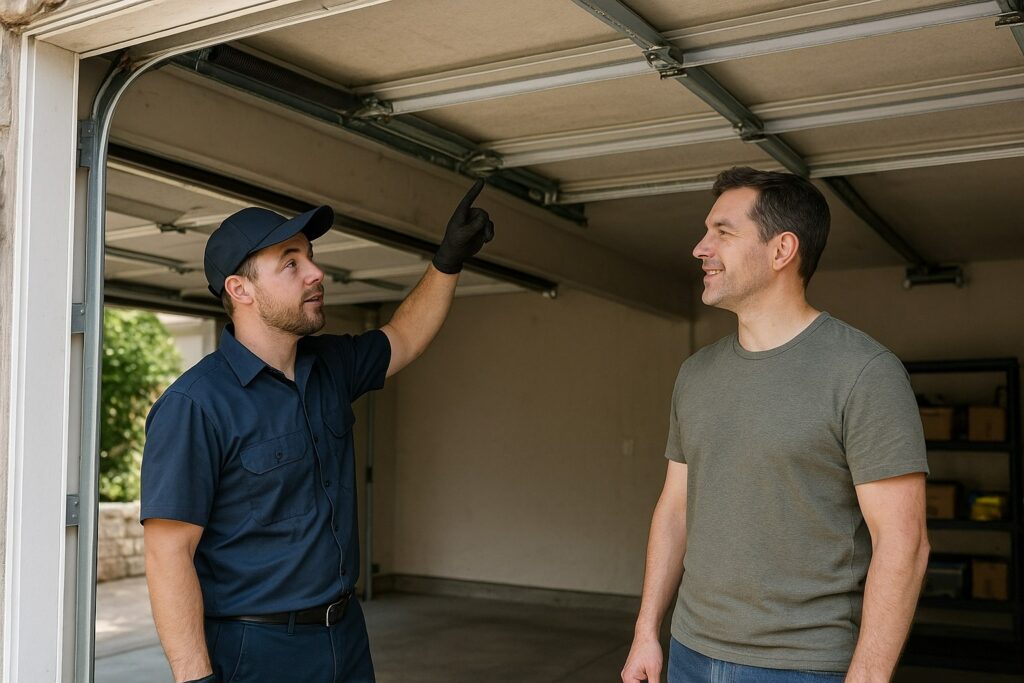
We welcome questions. Ask about maintenance services, installation services, or options for a new garage door if your panels are water-damaged, delaminating, or badly dented. Paired with a modern garage door opener, a new garage door can transform curb appeal and improve security.
When a New Door or Opener Makes Sense
Sometimes, the most cost-effective and safest move is a replacement.
- Wood doors with rot or delamination that compromises hinges
- Steel doors with deep creases across multiple sections
- Openers without modern photo eyes or rolling code security
- Doors that are too heavy for standard springs and hardware
A modern insulated steel door improves energy control and quiets operation. A new opener adds smart features, battery backup, and smoother starts and stops that protect the door and extend part life. We carry and service many brands and configure systems to the exact condition and needs of your home or business.
Frequently Asked Questions (FAQs)
1. How often should I have my garage door professionally inspected?
Even if your door seems to work fine, it’s best to schedule a professional inspection at least once a year. A technician can identify wear, stress cracks, or weak components that might not be visible during a casual visual check.
2. Can I use regular household oil instead of garage door lubricant?
No. Regular oils or WD-40 can attract dust and grime, which eventually cause buildup in the tracks and bearings. Always use a silicone-based or lithium-based lubricant made specifically for garage doors to keep the parts moving smoothly.
3. Why does my garage door make popping or snapping sounds when it opens?
Popping or snapping noises often indicate that the torsion springs or cables are dry or misaligned. Sometimes the sound comes from metal parts expanding or contracting with temperature changes, so lubrication or minor adjustments usually solve the issue.
4. How can I tell if my garage door opener is the right size for my door?
The opener should be rated to handle your door’s weight and size. If your opener struggles to lift or if it stalls midway, it may be undersized—or the springs may be out of balance—so a technician should evaluate both before replacing the opener.
The Takeaway
You can safely complete simple tasks like cleaning tracks, lubricating moving parts, tightening loose hinge screws, and aligning sensors if you plan the work, secure the door, disconnect power, and respect the limits of DIY. The moment you face springs, cables, significant misalignment, or electrical troubleshooting inside the opener, it is time for professional help. That is how you protect your family, your vehicles, and your home investment.
How Can Morristown Overhead & Garage Door Center Help You?
When you are ready for expert support, we deliver garage door repair, maintenance, and installation with care and precision. Our expert team of skilled technicians serves homes and businesses across Audubon, NJ, and nearby communities. We handle broken springs, malfunctioning openers, bent tracks, noisy operation, panel replacement, full new garage doors, and custom upgrades. We bring the right parts, the right tools, and years of experience to every job so you get safe, reliable results the first time.
What you can expect from us
- Same-day and next-day appointments when available
- Clear explanations and a written estimate before we start
- High-quality components matched to your door and opener
- Thorough inspection after each repair so your system leaves our hands balanced and quiet
📍 Address: 36 Phoenix Ave, Morristown, NJ 07960, USA
📞 Phone: (862) 208 2994
Contact us today to schedule your appointment or ask a quick question. Whether you need quick repairs, routine maintenance, or a new garage door paired with a smooth garage door opener, Morristown Overhead & Garage Door Center is ready to help your door operate safely and quietly for years to come.
- Safety Tips to Follow During Basic Garage Door Repair Work
- What to Know About Automatic Garage Doors in Barrington, NJ
- Garage Door Opener Repair Services in Barrington, NJ: What to Expect
- What to Expect from a Garage Door Tune-Up in Barrington, NJ
- Garage Door Maintenance in Barrington, NJ: Prevent Repairs with Regular Service